Only essential cookies required for basic site functionality are used.
Protein: Building Blocks of Life
Exploring the structure, functions, and sources of proteins in human nutrition.
Understanding Proteins
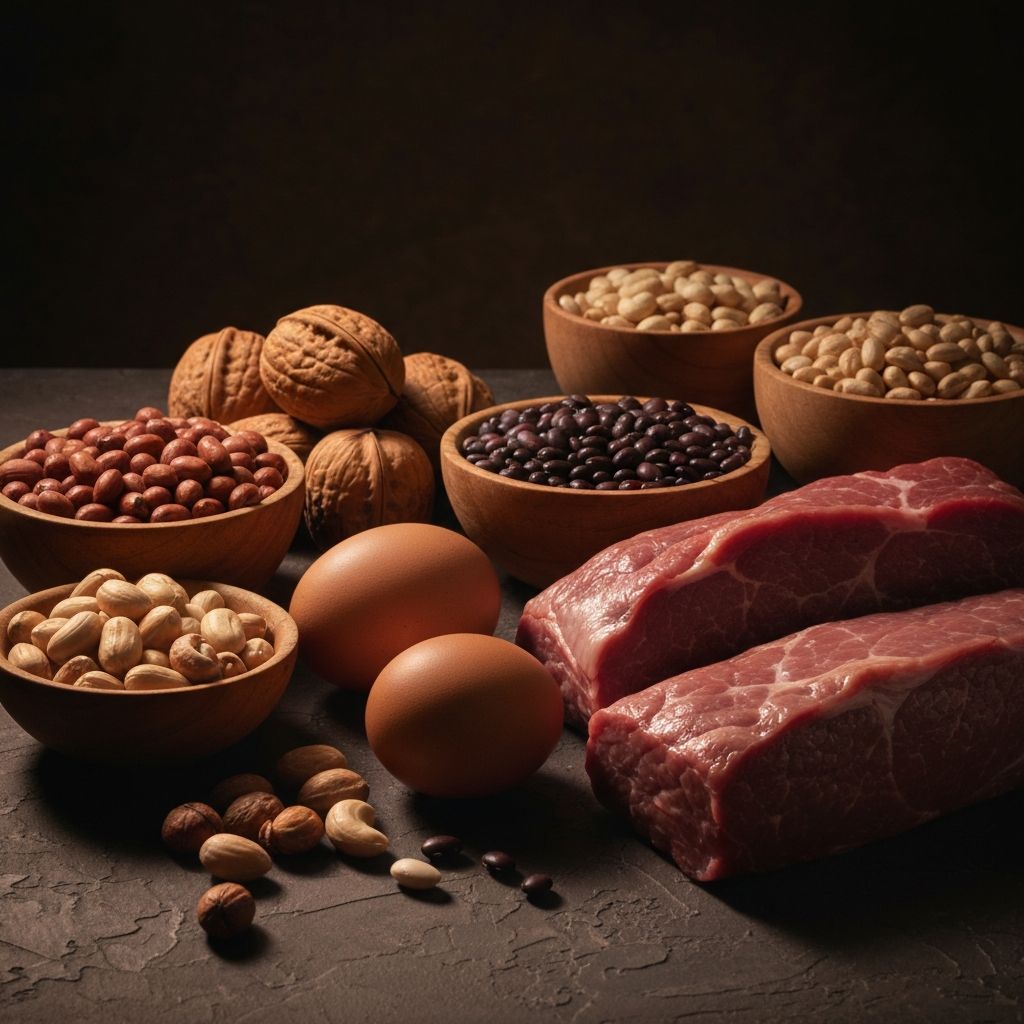
Proteins are complex molecules composed of amino acids linked together in specific sequences. They represent one of the three primary macronutrients and are essential for virtually every biological process.
Unlike carbohydrates and fats, which are primarily used for energy, proteins serve primarily structural and functional roles. However, when energy is needed, the body can break down proteins for fuel.
Key Protein Functions
- Building and repairing tissues including muscles, bones, cartilage, and skin
- Producing enzymes that facilitate chemical reactions
- Creating hormones that regulate body processes
- Forming antibodies for immune function
- Transporting and storing nutrients
- Maintaining fluid balance and pH
Amino Acids: The Building Blocks
Proteins are made up of amino acids, which are organic compounds with a specific chemical structure. Twenty different amino acids combine in various sequences to create the thousands of proteins found in nature.
Essential vs. Non-Essential Amino Acids
Essential amino acids: Nine amino acids that the human body cannot synthesize and must be obtained from food sources. These are: histidine, isoleucine, leucine, lysine, methionine, phenylalanine, threonine, tryptophan, and valine.
Non-essential amino acids: Eleven amino acids that the body can produce from other compounds, even if not consumed directly through food. However, consuming them from food is also beneficial.
| Amino Acid Type | Examples | Dietary Source Importance |
|---|---|---|
| Essential | Leucine, Lysine, Methionine | Must be obtained from food |
| Non-Essential | Alanine, Aspartate, Glutamate | Body can synthesize; also found in food |
| Conditionally Essential | Arginine, Glutamine, Tyrosine | Essential during illness or stress |
Complete and Incomplete Proteins
Proteins are classified based on their amino acid profiles, particularly whether they contain all nine essential amino acids in adequate quantities.
Complete Proteins
Contain all nine essential amino acids in sufficient quantities. These include most animal-derived proteins such as eggs, dairy, meat, poultry, and fish.
Common sources: Chicken, beef, fish, eggs, yogurt, cottage cheese.
Incomplete Proteins
Lack one or more essential amino acids or contain them in insufficient quantities. Many plant-based proteins fall into this category.
Common sources: Beans, lentils, nuts, seeds, grains, vegetables.
Complementary Proteins
Incomplete proteins can be combined with other incomplete proteins to create a complete amino acid profile. This is particularly relevant for plant-based diets.
Example: Beans and rice, hummus and whole wheat pita.
Protein Sources
Proteins come from both animal and plant sources, each offering different nutritional profiles and benefits.

Animal-Based Proteins
- Meat and poultry: Complete proteins with high biological value
- Fish and seafood: Complete proteins often rich in omega-3 fatty acids
- Eggs: Highly nutritious complete proteins
- Dairy products: Milk, cheese, yogurt provide complete proteins
Plant-Based Proteins
- Legumes: Beans, lentils, chickpeas; often combined with grains
- Whole grains: Quinoa, oats, brown rice; provide incomplete proteins
- Nuts and seeds: Almonds, peanuts, sunflower seeds; nutrient-dense options
- Vegetables: Broccoli, spinach, asparagus provide small amounts of protein
Protein Digestion and Absorption
Understanding how the body processes protein helps contextualize why adequate protein intake matters. The digestive system breaks down proteins into individual amino acids, which are then absorbed and utilized by cells.
The Digestive Process
- Mechanical digestion: Chewing begins breaking down protein structures
- Stomach acid: Hydrochloric acid denatures proteins, beginning chemical breakdown
- Enzymes: Proteases break peptide bonds into smaller units
- Small intestine: Further breakdown and absorption of amino acids occur
- Absorption: Amino acids cross intestinal walls into bloodstream
- Transport: Amino acids are transported to cells throughout the body
Important Information
This page presents educational information about protein science and nutrition. It is not medical advice and should not replace consultation with qualified healthcare professionals. Individual protein requirements vary based on age, activity level, health status, and other factors. Any significant dietary changes should be discussed with appropriate professionals.